Payout rounds
Every hour the town pays its rent
$TOWN fees are collected automatically and forwarded to a payroll contract that nobody owns, and it waits there as WETH. When the clock reaches a boundary anyone at all may call a round, and everything waiting is spent on tokenized stock for the four districts. That single call is what this page describes.
one hour between boundaries
Boundaries sit one hour apart. The hour is counted by the payroll contract from its own last boundary and not from midnight UTC, so this clock asks that contract rather than the calendar, and it shows whatever answer comes back. Nothing fires by itself at zero either. A round exists only once somebody sends the transaction, and the contract does not care whose wallet that is.
The ledger
Every round is written down here
One row per round. The round number, the moment it was called, the WETH that was converted, and then for each district the units of stock that were bought and the rent that landed on a single floor. Every row is read from the Round event the payroll writes, so a row is on this page because a round wrote it on the chain, and nothing is invented to fill the gap.
This table lists the rounds the payroll has written, and it has none to list. It is never seeded with a sample, so an empty table is the chain saying it holds no round rather than the page holding one back. Every row is read from the Round event the contract writes and carries the hash of the transaction it was written in, so the units bought and the rent added can be checked against the chain instead of taken on trust.
The columns this ledger carries
| Round | Called, UTC | WETH converted | Silicon Row, NVDA | Orchard Street, AAPL | Launch District, SPCX | Motor Mile, TSLA | Transaction | ||||
|---|---|---|---|---|---|---|---|---|---|---|---|
| Units | Per floor | Units | Per floor | Units | Per floor | Units | Per floor | ||||
| There is nothing on the ledger to list. Each successful call writes its row at the top of this table, and the table gains one row for every round that converted something. | |||||||||||
Rent per floor is the number a holder actually feels. A building with sixteen floors collects it sixteen times. In the table it is the units a round bought for a district divided by every floor standing in that district. A round that found too little waiting in it returns without writing anything, so it never appears as a row here.
Anatomy of a round
Six things happen, in this order
None of it is discretionary. The payroll contract has no owner and no way to send the money anywhere else, so a round is the same sequence every time, no matter who pays the gas to start it.
Fees arrive
$TOWN trading fees are collected automatically and reach the payroll contract in both assets. The WETH half waits there for a round, and the token half is burned by anyone who asks rather than held.
That contract has no owner and no withdraw function. Between rounds it does nothing whatsoever except hold what arrives.
A boundary passes
Boundaries sit one hour apart, each counted by the contract from the last one. Once a boundary has passed, the contract accepts a call from any address at all.
There is no keeper list and no admin. A call inside the hour leaves the next boundary exactly where it already was. If a whole hour goes by with nobody calling, the contract sets the next boundary one hour from that late call, so missed hours never pile up into a burst.
The pot splits four ways
Whatever is waiting is cut into four equal quarters, one per district. How big a district is has no bearing on this step.
A district with a thousand buildings standing and a district with fifty receive exactly the same quarter of exactly the same pot.
Each quarter buys its stock
A quarter is spent on that district's tokenized stock, routed WETH to USDG to the stock itself.
The swap carries a price floor read from the pool's own thirty minute average, which is what keeps a thin pool from being walked up inside a single round.
The accumulator rises
The stock a district just bought is divided across every floor standing in that district and added to a running accumulator.
A crowded district pays less for every floor in it. An empty one pays more. No tokens move to any wallet at this step.
Holders claim whenever
Rent belongs to the building, not to the wallet holding it, so it waits in the accumulator until somebody claims. There is no deadline.
Claim before you sell. Unclaimed rent travels with the NFT to the next owner, and so do any floors that were built on it.
The split
Four equal quarters, every time
Choose a district to recolour this page and to follow what its quarter buys. The share itself never moves, whatever is standing there.
Equal quarters is the only real decision in the whole mechanic. Everything after it is arithmetic: the quarter is fixed, the crowd standing in it is not, and the rent that reaches one floor is simply that quarter divided by every floor beside it.
Inside a district
The quarter, then the crowd
A round pays a district, and the district pays its floors. Every floor standing there draws the same share of that quarter whatever tier it belongs to, so a Legendary tower earns because it carries sixteen floors, not because it is Legendary.
Rent per floor is not quoted anywhere on this site, because it depends on the fees a round finds waiting in the payroll and on how the town spreads itself across the four districts. Any figure printed here would be a guess wearing the clothes of a result, while the ledger above prints the real one, round by round, as the contract writes them. Rezoning a building into a quieter district costs a burn and locks it for seven days, which is what stops a wallet stepping across a minute before a round and stepping back after.
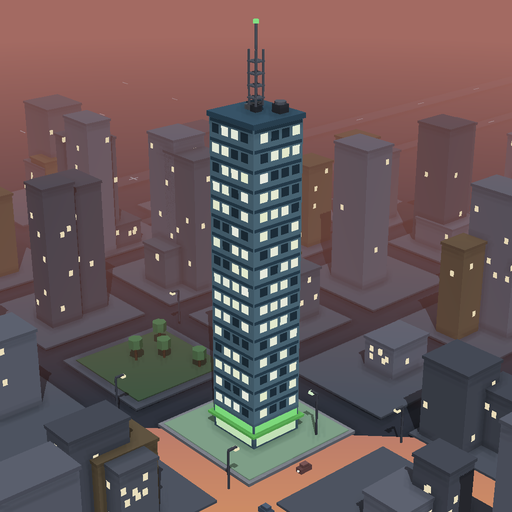
16 floors stand under this roof, and every one of them draws the same share of the Silicon Row quarter as every other floor standing there.
Edge cases
When a round does not run
Two rules keep the cadence honest. A round with too little waiting in it is skipped, and skipping it still advances the clock by one hour rather than pushing the schedule back.
 The payroll
Robinhood Chain
Fees land in it, rounds spend it, holders claim out of it. There is no key that can point the money anywhere else and no pause switch, which is also why nobody can promise you a round on demand. The clock and the callers are the only things that make it move.
Stock is bought through the district's own pool, paying in USDG that the round bought with WETH a moment earlier. Both hops happen inside the one transaction that the caller sent.
If less than the minimum has arrived since the last payout, the round is skipped rather than run. Splitting dust four ways and swapping each crumb would cost more in gas than it pays in rent.
A skipped round still moves the clock on by one hour, so the next boundary sits where it always was and nobody can bend the timing by starving one round. If a full hour passes with nobody calling at all, the next boundary is set one hour from that late call instead.
There is no privileged caller. A holder, a bot, a stranger who likes the artwork, all the same to the contract. The pot goes where the rules say regardless of who paid the gas.
Moving a building to another district costs a burn and freezes it in place for seven days. Chasing the quiet district is allowed. Chasing it minutes before a round is not.
The base of the town
Common buildings, two floors each
3,333 of the 5,555 are Common and bring two floors apiece. As a group they hold the largest single claim on every district quarter, of all rent, and building by building they hold the smallest.
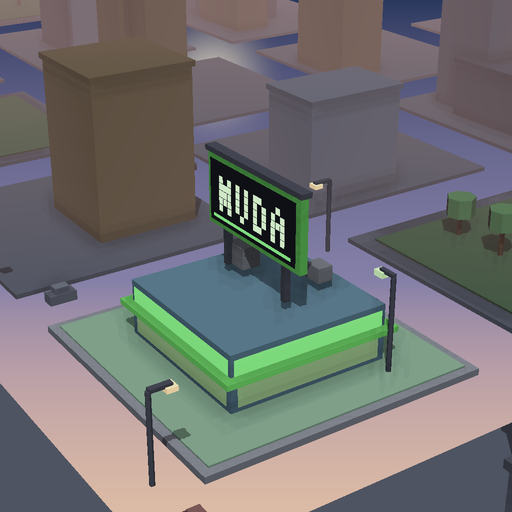

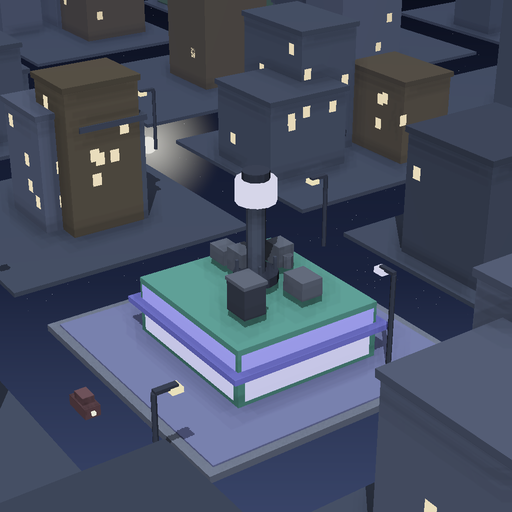
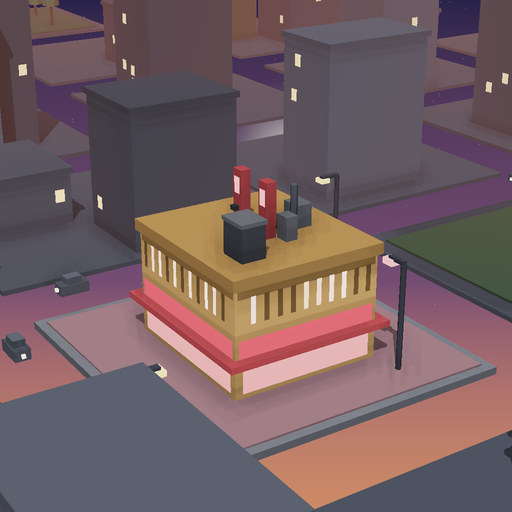
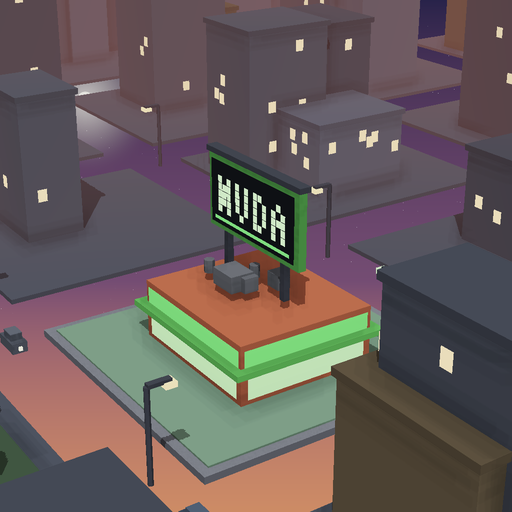
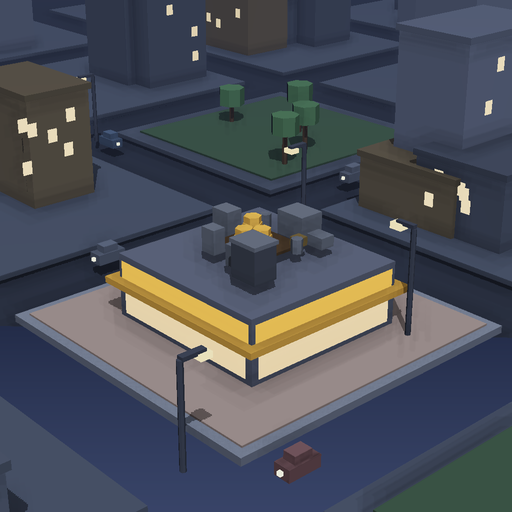
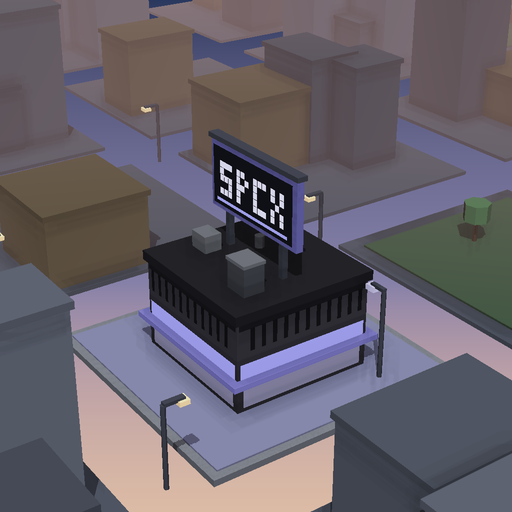

Renders from the collection. Materials and rooftops follow the district a building stands in.