Documentation
The whole mechanic, written out
Ten sections. What a building is, how a round pays, what a floor is worth, what building and rezoning cost you, who can touch the money, and what can go wrong. No marketing in here. Anything that can be read from the chain is read from the chain when this page loads, and if a number is invented for an example the line says so.

Buildings that are paid rent
Town Brokers is 5,555 procedurally generated 3D buildings on Robinhood Chain, an Arbitrum Orbit L2. One NFT is one building standing on one plot. The token is $TOWN.
Every building stands in one of four districts, and every district is tied to one tokenized stock. $TOWN fees fund a payroll contract. Every hour that payroll buys stock and hands it to the buildings. That is the whole idea. Everything below is the detail behind it.
The four districts are Silicon Row, which pays in NVDA, Orchard Street, which pays in AAPL, Launch District, which pays in SPCX, and Motor Mile, which pays in TSLA. Three of them hold 1,389 Towers and Motor Mile holds 1,388.
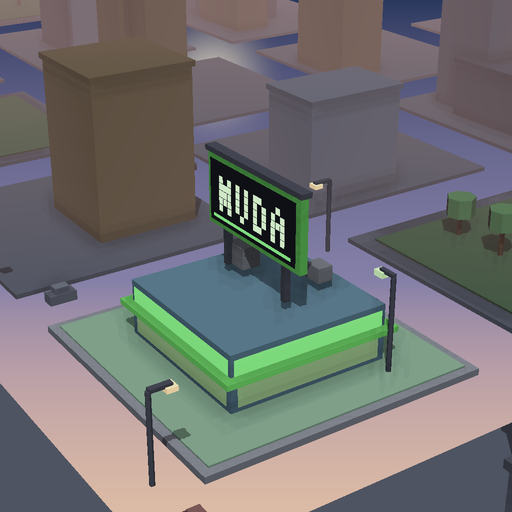
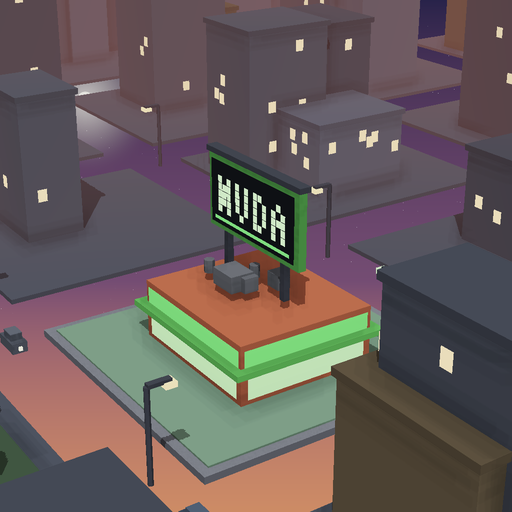

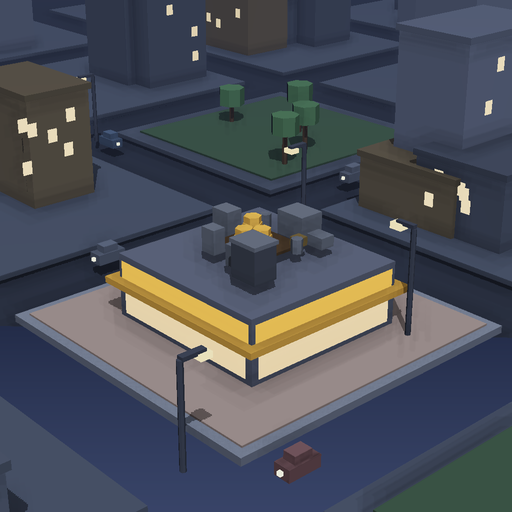
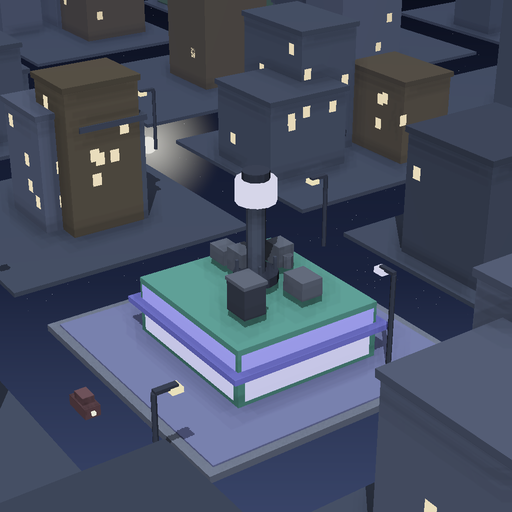
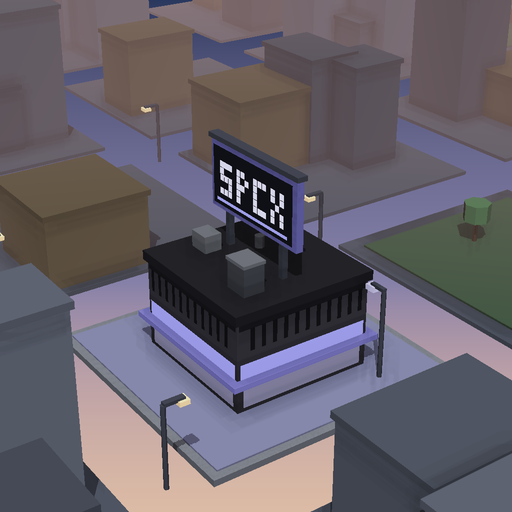
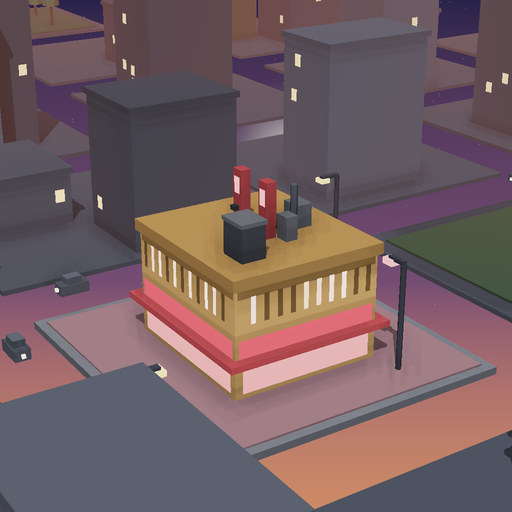

The roof tells you the district. Silicon Row has masts, dishes and server halls. Orchard Street has gardens, glasshouses and hives. Launch District has pads, hangars and beacons. Motor Mile has chargers, garages and lit signs.
What is live today
Everything here runs on Robinhood Chain and anyone can inspect it without asking us. The collection holds the art and the sale. The payroll holds the money and has no owner. $TOWN is the token whose trading fees the payroll spends. Read all three rather than take any of this on trust.
Every row below is read from the collection contract when this page loads. If a row says it could not be read, the read failed, and you should not treat that row as a fact.
- Collection
- reading
- Supply
- reading
- Minted so far
- reading
- Still unminted
- reading
- Mint price
- reading
- Cap per wallet
- reading
- Sale
- reading
The address is the one this site is built against. Every figure beside it was read from that contract, not typed into this page.
There is no mint date. While the sale switch is off the mint function will not take a transaction from anyone, so there is nothing to be early for. Sections 02 to 06 describe what the payroll will do once it exists. Until it is deployed, read them as design and not as something you can check.
Four equal quarters, then per floor
This is the part worth reading twice. It is six steps, and the arithmetic is written out underneath them.
Someone moves $TOWN. A fee is taken automatically and all of the project's share is our share, and every unit of our share goes to the payroll contract. We keep none of it, and there is no step where it passes through a wallet we hold.Fees accumulate, the payroll receives every unit
The payroll contract sits there holding whatever has arrived since the last round. Once the hourly boundary passes, anyone may call a round. The caller takes no cut and chooses nothing. All that calling does is start the same fixed arithmetic.
The pot splits into four equal quarters, one per district. Equal means equal. A district packed with buildings does not get a larger quarter, and a district with almost nobody standing in it does not get a smaller one.quarter = pot / 4
Each quarter buys the stock of its own district. The route is WETH to USDG to stock, and the swap will not fill below a price floor read from the pool's own average price over the last 30 minutes. Section 09 explains why that floor is there.
Inside a district, the quarter is divided across every floor standing in that district, plus a fixed 1,000 phantom floors the contract counts in every district and no building owns. Not per building. Per floor. A crowded district pays less for each floor, an empty one pays more, and because the divisor is never smaller than 1,000, no single floor can ever be paid more than a thousandth of a quarter.rent per floor = quarter / (floors standing in that district + 1,000)
Each building is credited its own floor count times the rent per floor, in the stock token of its district. That credit sits on the building until somebody claims it.building rent = its floors x rent per floor
Worked example
The pot and the two floor counts in this table are made up, and each of those lines says so. The phantom floors are not; that figure is a constant of the contract. No round has run, so there is no real pot and no real floor count to put in here.
| Line | Working | Result |
|---|---|---|
| Pot waiting in the payroll contract | Made up for this example | 8,000 USDG |
| One quarter, each district | 8,000 / 4 | 2,000 USDG |
| Phantom floors, in every district | Fixed in the contract | 1,000 |
| Floors standing in Silicon Row | Made up for this example | 6,200 |
| Rent per floor in Silicon Row | 2,000 / (6,200 + 1,000) | 0.2778 USDG |
| Floors standing in Motor Mile | Made up for this example | 2,900 |
| Rent per floor in Motor Mile | 2,000 / (2,900 + 1,000) | 0.5128 USDG |
| A seven floor Rare in Silicon Row | 7 x 0.2778 | 1.94 USDG of NVDA |
| A seven floor Rare in Motor Mile | 7 x 0.5128 | 3.59 USDG of TSLA |


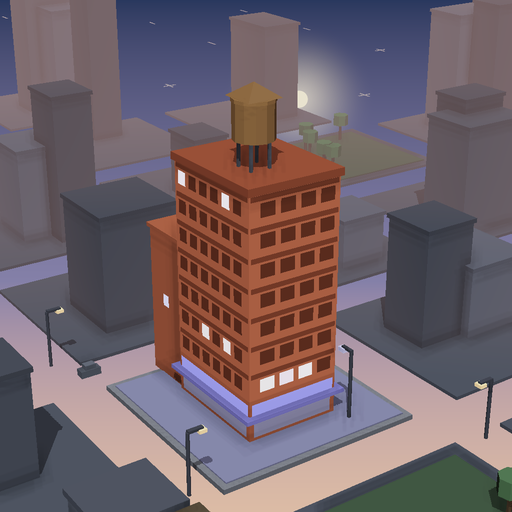
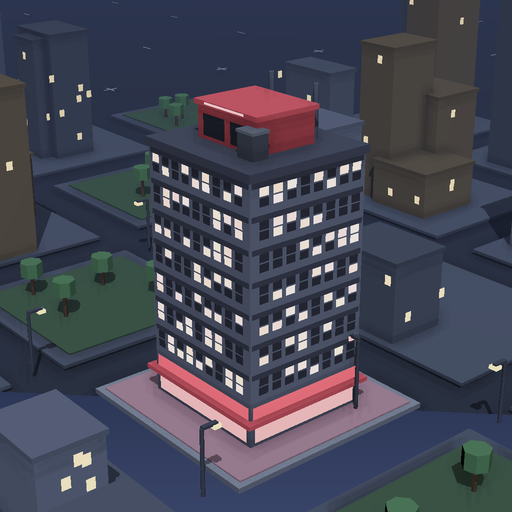
Four Rares, seven floors each, one in every district. Same tier, same floors, four different pay rates in the same round, because the quarter is shared with whoever else happens to be standing there.
Skipped rounds
If less than the minimum is waiting when a round is called, the round is skipped. That minimum exists so a round never spends more in gas and slippage than it is able to pay out. The clock does not stop when a round is skipped. The next boundary is still an hour after the last one, so the cadence never drifts and a quiet week does not push the schedule out of shape.
The exact minimum will be published alongside the contract addresses in section 07.
The payroll's balance and its full round history are readable on chain, and on the rounds page without a wallet. Nobody has to take our word for what a round paid.
A floor is the unit of pay
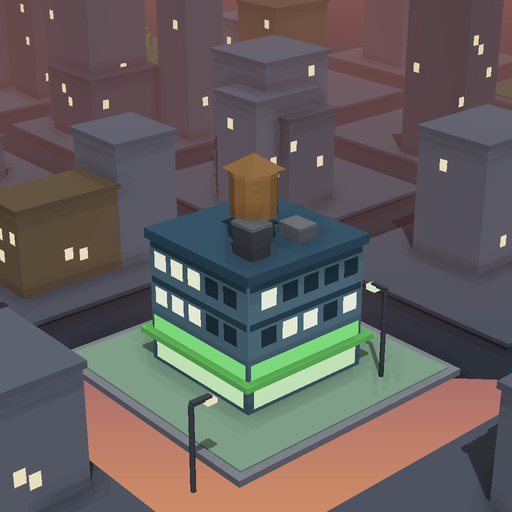
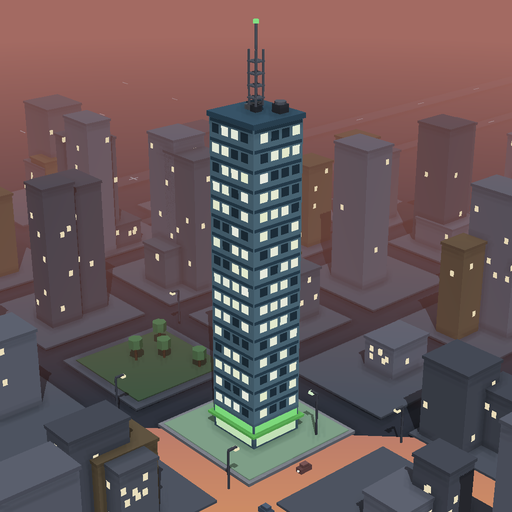
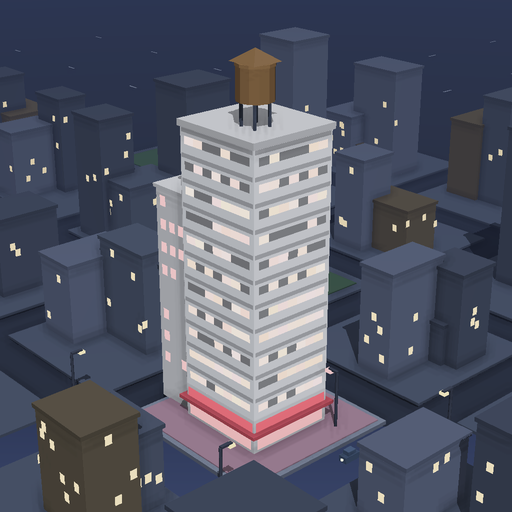
There are five tiers. A tier decides how many floors a building is born with, and floors are the only thing the payout arithmetic counts. Weight and floors are the same number. Nothing else about a building changes what it is paid.
| Tier | Count | Born floors | May build | Max floors | Born weight | Share of born floors |
|---|---|---|---|---|---|---|
| CommonTwo floors at birth |
3,333 | 2 | 2 | 4 | 6,666 | 34.3% |
 UncommonFour floors at birth UncommonFour floors at birth |
1,389 | 4 | 4 | 8 | 5,556 | 28.6% |
| RareSeven floors at birth |
555 | 7 | 7 | 14 | 3,885 | 20.0% |
 EpicEleven floors at birth EpicEleven floors at birth |
222 | 11 | 11 | 22 | 2,442 | 12.6% |
 LegendarySixteen floors at birth LegendarySixteen floors at birth |
56 | 16 | 16 | 32 | 896 | 4.6% |
| All buildings | 5,555 | 19,445 | 100% |
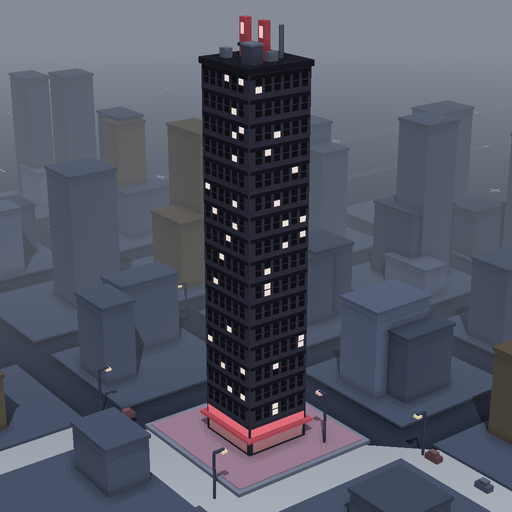
There are only 56 Legendaries in the whole collection, and each one is born with sixteen floors. Together they hold 896 of the 19,445 born floors, which is 4.6% of everything standing on day one.
The five rows above are all Silicon Row so the ladder reads cleanly. Every tier exists in every district, with its own materials and its own roof.
Reading the share column honestly
That last column is the share of all born floors, and it is not a share of rent. Rent is split by district before it is split by floor, so what a building actually earns depends on how many floors stand in its own district that round. The share column only tells you what the split would look like if every district happened to be loaded identically, which it will not be.
Every building earns from the moment it exists. There is no activation, no staking, no lock and no burn required before rent starts accruing.
Burn to build, capped at double
A building is born with floors and can buy more by burning $TOWN. Built floors are capped at the number it was born with, so nobody more than doubles. A Common born with two floors can reach four. A Legendary born with sixteen can reach thirty two. Once a building is at its cap it is finished, and no amount of $TOWN moves it further.
The burn gets steeper as the building grows. A floor costs 5,555 $TOWN plus 2,222 for every floor the building has already built, so the first one it buys costs 5,555 and the second 7,777. By the sixteenth floor of a Legendary a single floor costs seven times what the first one did, which is what stops one wallet buying the rare tiers and topping every one of them out.
Building is done from your inventory. Open it, pick a building, choose how many floors to add, and the exact burn is shown before you sign anything. The contract charges the same figure the page quotes, because the page works it out with the contract's own formula.
Built floors are permanent and they travel with the NFT. If you sell the building, the floors you paid for go with it. They are part of the asset, not a claim you hold separately.
Two floors and four floors. A Common is born at two and may build two more, at which point it is paid on four floors, the same count an Uncommon starts with. The Uncommon can then build to eight, so the ladder never closes up.
Building raises your pay and lowers everyone else
Adding floors does two things at once. Your building takes a larger slice of the quarter because it now counts more floors. At the same moment the district holds more floors in total, so the rent per floor drops for every building standing there, including yours.
There is no way to add floors that helps only you. If everyone in a district builds to their cap, the district pays the same quarter across twice as many floors and each floor earns roughly half as much. Building is worth doing when the district around you is not doing it.
This is also why the collection cannot inflate its way out of anything. The pot is not affected by how much anyone builds. Only the way it is divided changes.
Moving district costs a burn and seven days
A building is not stuck where it was minted. Rezoning moves it to another district, which changes which stock pays it and which crowd it shares a quarter with. Rezoning costs a burn of $TOWN, and it locks the building for 7 days. The burn is 5,000 $TOWN plus 500 for each floor the building carries, so a tall building pays more to move than a short one. That is deliberate: a tall building arriving in a quiet district changes the arithmetic for everybody already standing there, and it should cost more to do that than to move a two floor kiosk.
Rezoning is done from your inventory, on the same card as the building itself, with the burn and the seven day lock both shown before you sign.
One tier, four districts. Rezoning changes the stock that pays you and the floor count you are divided against. It does not change your tier, your floors or your artwork.
Why the lock exists
Without it, the four way split would be trivially gamed. Everybody would watch the floor counts, pile into whichever district was emptiest a minute before the boundary, collect the fat quarter, and move straight back out. The empty district would not stay empty long enough for anyone standing there to be rewarded for standing there.
Seven days is long enough that moving has to be a view rather than a reflex. Rounds are hourly, so the lock covers 168 of them, and you are betting that the district you are moving into stays the thinner one across all of them. If you are wrong, you paid a burn and you are stuck with it for the week.
The lock is on rezoning. It exists to stop a building jumping into an empty district right before a round.
The rent belongs to the building
When a round pays, the payroll contract credits the stock token to the NFT. It does not credit it to whoever happens to be holding the NFT at that moment. Rent is a property of the building, in the same way its floors are.
That has one consequence you need to hold on to: claim before you sell. Unclaimed rent travels with the NFT. If you transfer or list a building with rent sitting on it, that rent is now the new owner property and there is no mechanism to pull it back. Nobody can undo it for you.
The rule cuts the other way too. If you buy a building that nobody has claimed for weeks, everything sitting unclaimed on it is yours the moment it is yours. It is worth checking that before you decide what a listing is worth.
What you actually buy
- The building itself, its tier and its plot.
- Its floors, both the ones it was born with and any that were built and paid for.
- Its district, and its rezoning lock if one is still running.
- Whatever rent is sitting on it unclaimed.
Claiming is a normal transaction that anyone holding the building can send. There is no deadline on it and nothing expires, so rent left on a building is not lost, only parked. It is parked on an asset that can change hands, which is the whole reason to claim it before it does.
Addresses you should check yourself
Robinhood Chain is an Arbitrum Orbit L2. Three addresses are ours: the collection, the payroll and $TOWN. The four stock tokens and USDG are the market's and were on chain before this project existed, so we can neither change them nor be blamed for them. Pick a district to see its numbers, and to recolour the page to it.
Reading this district from the chain.
reading
Our own contracts
A row with an empty address is one we have not published. Treat anything filling that gap from somewhere else as a forgery.
| What it is | Address | Copy to the clipboard |
|---|---|---|
| Reading the addresses. |
Both are on chain. The collection holds the art and the sale, and the payroll holds the money and has no owner. Read them rather than take any of this on trust.
Our addresses appear in the table above and are posted from the account linked at the bottom of this page. Nowhere else. Anything claiming to be a Town Brokers contract that is not in that table, on this chain or any other, is not one, however convincing the site around it looks.
Royalty, and how it is enforced
The collection pays a 5% royalty on secondary sales. The rows below are read from the collection contract when this page loads, so if the setting ever changes this page changes with it.
- Royalty on a sale
- reading
- Royalty receiver
- reading
- Transfer validator
- reading
Enforcement is active on chain, through the transfer validator in that last row. The collection asks the validator about a transfer before it settles it, so a marketplace that does not honour the 5% does not get a transfer that quietly skips the royalty; it gets a transfer that is rejected. That is a condition of the move going through, not a request.
Be clear about the limit of it. This is not permanent. The collection owner can point the contract at a different validator, or at none, and can change the royalty itself. Nothing on chain stops that today, so the honest statement is that enforcement is on right now and can be turned off later by whoever holds the owner key. If that matters to you, read the setting yourself rather than trusting this paragraph, and read it again on the day it matters.
Tokens the round routes through
These belong to the market. They are here because a round buys through them, and because you should know which contract is meant before somebody offers you a different one with the same ticker.
| What it is | Address | Copy to the clipboard |
|---|---|---|
| Reading the addresses. |
Read the address, not the name
More than one contract on this chain answers to a given name, and the order a block explorer puts them in is not a recommendation. Check the address character by character, every time, here and everywhere else. The route also crosses WETH on its way to USDG, and the WETH the payroll uses is fixed when the payroll is deployed, so it is not published here yet; it will go in the table above with the payroll itself.
Pool depth and fee by district
| District | Stock | Towers | Pool depth | Pool fee |
|---|---|---|---|---|
| Reading the four pools. |
Pool depth is the USDG sitting in each pool, read from the chain when this page loaded. It moves with every trade, so reload it rather than quoting it. The Towers column is the count of buildings dealt to that district in the sealed trait table, not a count of anything minted, because nothing has been minted.
What we can touch and what we cannot
Two contracts, two different answers. The payroll is ownerless: no owner key, no withdraw function, and no upgrade path that could add one later. That is the most important sentence on this page and it is the one you should verify yourself rather than believe, by reading the deployed bytecode at the address in section 07.
The collection is a different matter. It has an owner, and that is not an oversight; the owner is what opens the sale and what holds the royalty setting. The first list below is the payroll's design, which nobody can check yet. The second is what we actually hold today, most of it on the contract that is deployed.
What the design does not let us do
- Take from the pot. Nothing routes to us. Every unit of the project's share goes to the payroll contract and stops being ours the moment it arrives.
- Change the split. Four equal quarters is fixed in the round. We cannot weight a district up or down, including the one we happen to be standing in.
- Choose who gets paid. The round divides by floors. There is no list, no allowlist and no way to skip a building or favour one.
- Stop a round. Anyone may call one once the boundary passes. We do not hold a pause switch and cannot withhold a payout.
- Move your building. Rezoning is the holder's action and costs the holder a burn. We cannot move a building into or out of a district.
- Mint more buildings. The cap is 5,555 and there is no plot 5,556. That one is a constant of the deployed collection, so it is among the few claims in this section you can check today.
What we do control
- The sale switch. The sale on the collection is closed, and we are the ones who open it. Nothing mints while it is closed.
- The mint date. The price is already set on chain at 0.0005 ETH with a cap of 10 per wallet, and both are read back at the top of this page. The date is not set, and when it is, it goes on X first.
- The royalty and its enforcement. Section 07 has the detail and the live setting. It is on today and the owner can change it later.
- Deploying the payroll and the token in the first place, and publishing their addresses.
- The artwork, this site, and what gets posted.
- Funding the pot the same way anyone else can, with no special treatment for doing it.
Why you should not take our word for any of this
Half of it is checkable now and half of it is not. The collection is on chain, so its supply, its price, its cap per wallet, its royalty and its sale switch are facts you can read yourself, and this page reads them in front of you rather than asserting them. The payroll is not on chain, so every claim about the split, the ownerless design and the round is stated intent with no bytecode behind it. When it is deployed and verified, read it, or find somebody who will read it for you, and then decide. A promise on a website is worth exactly what a promise on a website is worth.
The swap will not fill below the average
Every round buys stock in an open pool, at a moment everybody can see coming. That is an obvious thing to stand in front of. Somebody who knows a round is about to fire could push the price up a second beforehand, let the round buy high into them, and sell straight back down. The pot would pay for it.
The floor is what makes that expensive rather than free. Before it swaps, the round reads the average price of the pool itself over the last 30 minutes and works out the least stock a quarter that size should be able to buy at that average. That figure is the floor, and the contract's maximum slippage is fixed at 3%, so a fill may land that far under the average and no further. If the pool would fill the round worse than that, the swap does not go through at all.
So a push has to be held to work. Moving the spot price for one second barely moves a 30 minute average. To drag the floor down with it, the price has to be held away from where it was for long enough to pull the average along, and every second of that costs real money and is open to anyone else to act against.
The route is WETH to USDG to stock, and the floor is read from the pool the round actually crosses. Depth is not the same in every district, which is why the floor matters more in some of them than others.
Pool depth in USDG, read from the chain when this page loads.

Two districts, two pools of different size. A round buying into a thinner pool moves the price against itself more, so the floor does the most work wherever the pool is shallowest. Which district that is on any given day is in the bars above, read from the chain rather than written down here.
What the floor does not do
It protects the round from a bad fill by cancelling the buy, not by finding a good one. If the pool is pushed hard enough, the honest outcome is that the swap does not happen. The pool fee also comes out of the buy before anything reaches a building, and the fee is not the same in every district; the table in section 07 carries the fee for each.
What can go wrong
This section is not a disclaimer. These are the things most likely to cost you money, written plainly, and you should read them as seriously as you read the payout rule.
Rent is $TOWN fees and nothing else
The only thing that funds the payroll contract is $TOWN fees. There is no treasury topping it up, no yield underneath it and no floor under the number. If the town is quiet, almost nothing arrives, rounds are skipped for want of a minimum, and holding a building pays you nothing at all. A quiet month is a month with no rent. This is the single most likely way this disappoints somebody, and it is worth sitting with before you buy anything.
The contracts are not audited
No third party has reviewed them. The collection is deployed and unaudited, and the payroll will be deployed unaudited unless that changes. A payout contract holds a pot and hands it out automatically, which is exactly the kind of thing bugs are expensive in. An ownerless contract also means nobody can reach in and fix it afterwards. The property that protects you from us is the same property that removes the emergency exit.
Tokenized stock prices move
A quarter buys exposure to NVDA, AAPL, SPCX or TSLA. Those go down as well as up, and rent you were paid last week can be worth less today. You are not choosing between a risky asset and a safe one when you pick a district. You are choosing which risky asset pays you.
Tokenized stock is not stock
You do not own shares. There is no vote, no dividend and no claim on a company. What you hold is a token that tracks a price, with whatever counterparty and issuer risk that carries.
Some pools are thin
The four pools are not the same size, and the shallow ones are shallow enough to matter. A large round buying into a shallow pool moves the price against itself, and the price floor answers that by cancelling the buy rather than by finding a better one. Thin pools can also be pushed around by people who are not you. The depth of each pool is in section 07 and section 09, read from the chain when this page loads, because a figure written into this paragraph would be stale by the time you read it.
The collection has an owner key
The payroll is designed to be ownerless, but the collection is not, and the collection is the half that is deployed. Whoever holds that key opens the sale and holds the royalty setting, the transfer validator that enforces it included. That key can turn enforcement off later, and nothing on chain prevents it. Section 07 shows what the setting is right now, read from the contract, and section 08 lists what the key does and does not reach.
The chain is young
Robinhood Chain is a new L2. Bridges, sequencers, explorers and tooling all carry their own risk, and none of it is in our hands.
Read it before you trust it
Read the contracts at the addresses in section 07 before you believe anything in sections 02 to 06. The rules described there live in code, and code is the only version of them that binds anybody. A website can say whatever it likes. Check the address you are signing against the one in that table, every time, and treat a building offered to you from anywhere else as a forgery.
This is not investment advice
It is a game about buildings, floors and rent, built by people who wanted to make it. It is not a security, not a fund and not a promise of income. Do not put in money you are unable to lose completely.
Where to go next
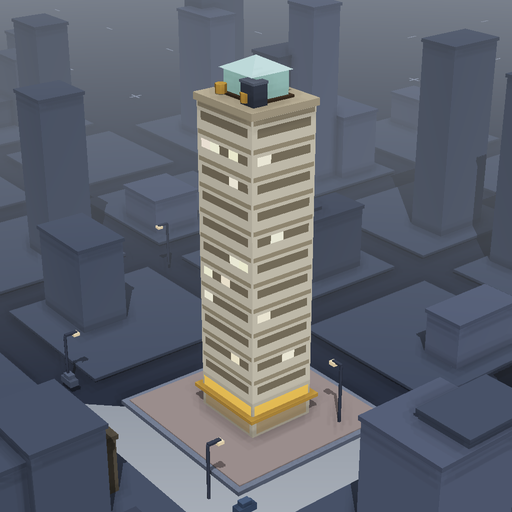
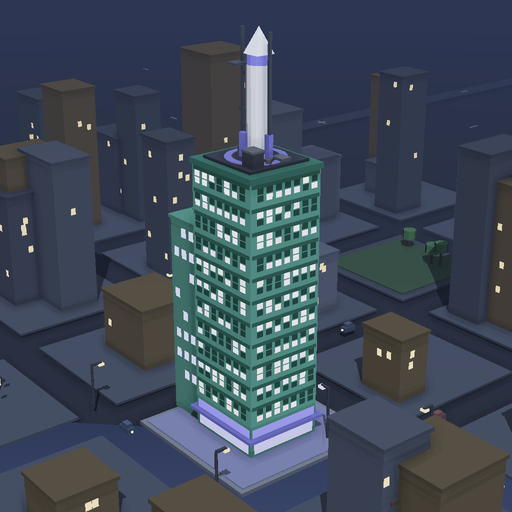

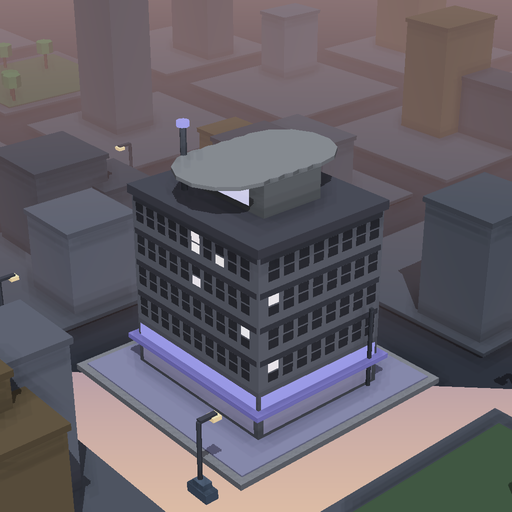
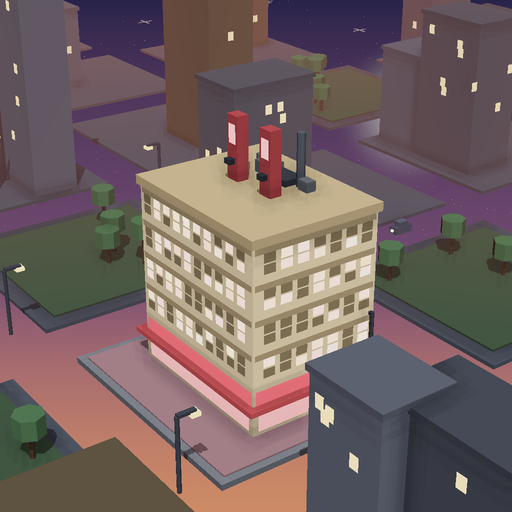
Four Epics and four Uncommons, one of each in every district. Every building in the collection is one of the five tiers, standing on one of the 5,555 Towers, paid by the floor.